
Claude Mythos: The Rise of AI in Cybersecurity
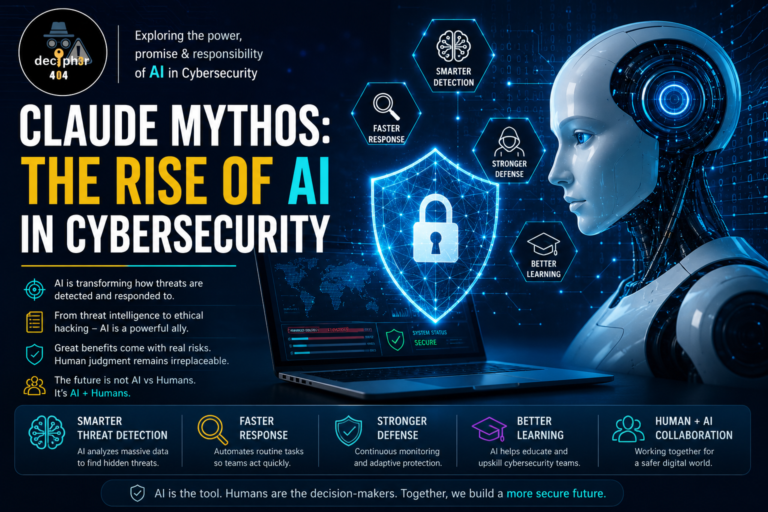
Artificial intelligence is transforming how people work, create, and solve problems—and cybersecurity is no exception. AI-powered tools are helping security professionals detect threats, analyze data, and respond faster to cyber risks. Alongside these advancements, the concept of Claude Mythos has emerged, representing the myths, expectations, and concerns surrounding AI’s role in cybersecurity. While some believe AI will revolutionize cyber defense, others fear it could strengthen cyberattacks or replace human expertise. The reality lies somewhere in between. This article explores what Claude Mythos means and how AI is reshaping the future of cybersecurity.
Table Of Contents
What Is Claude Mythos?
The term Claude Mythos is best understood as a cultural narrative rather than a technical concept.
It reflects how society interprets the rise of AI assistants in fields such as cybersecurity. Like many transformative technologies before it, AI has inspired both excitement and uncertainty. On one side of the conversation, people imagine AI as a digital guardian capable of stopping cyberattacks before they happen. On the other side, some fear that AI could introduce new risks, amplify misinformation, or diminish the value of human expertise.
Both perspectives contain elements of truth. The mythos emerges because humans naturally create stories around powerful technologies. We assign expectations to them. We project fears onto them. We imagine futures shaped by their capabilities.
In reality, AI is neither magic nor menace. It is a tool—powerful, evolving, and dependent on how people choose to use it.
Why Is Everyone Talking About AI?
Artificial intelligence has captured global attention because it is increasingly accessible. Tasks that once required specialized expertise can now be supported by intelligent systems capable of analyzing information and generating useful outputs.
Examples include:
- Educational platforms that provide personalized learning support.
- Customer service systems that answer common questions.
- Healthcare technologies that assist in identifying patterns within medical data.
- Productivity tools that summarize lengthy reports.
- Translation services that bridge language barriers.
These applications have made AI more visible in everyday life.As people witness its impact across industries, questions naturally arise about its role in digital security.
If AI can help write reports or organize schedules, could it also help defend computer systems? The answer is yes—but with important limitations.
How AI Is Changing Cybersecurity
The influence of AI in cybersecurity is growing steadily. Rather than replacing existing security practices, AI often acts as an assistant that helps professionals process large amounts of information more efficiently.
Threat Intelligence Analysis:
- Security teams monitor vast quantities of data to identify emerging threats.
- AI can help by highlighting patterns, organizing findings, and summarizing relevant intelligence reports.
- Think of it as having a research assistant that helps sort through an enormous digital library.
Summarizing Lengthy Security Reports:
- Cybersecurity documentation can be dense and time-consuming to review.
- AI tools can provide concise summaries that allow professionals to understand key points more quickly.
- This doesn’t eliminate the need to read critical details, but it can improve efficiency.
Incident Response Support
- When security incidents occur, teams must move quickly.
- AI may assist by:
- Organizing event timelines.
- Suggesting investigative pathways.
Highlighting potentially relevant information.
Human analysts still make the final decisions, but AI can help reduce administrative burden during stressful situations.
Vulnerability Research
- A vulnerability is a weakness that attackers could exploit.
- AI can assist researchers by helping them interpret technical documentation, compare disclosures, and identify recurring themes across multiple sources.
- It accelerates learning rather than replacing expertise.
How Ethical Hackers and Security Teams Use AI
The relationship between ethical hacking and AI is often misunderstood.
Ethical hackers are authorized professionals who identify weaknesses so organizations can improve their defenses. AI serves as a support mechanism rather than an autonomous security expert.
Practical applications include:
Understanding Unfamiliar Concepts
- Cybersecurity evolves rapidly.
- AI assistants can explain terminology, summarize new ideas, and provide starting points for further research.
Organizing Documentation
- Security professionals generate extensive notes during assessments and investigations.
- AI can help structure information into more manageable formats.
Interpreting Tool Output
- Many security tools produce detailed reports.
- AI may assist users in understanding what those findings mean in plain language.
- However, experienced professionals still validate conclusions independently.
Supporting Professional Development
- Students and practitioners frequently use AI to:
- Review concepts,
- Explore new domains,
- Generate study materials,
- Clarify confusing topics.
- In this sense, AI becomes a learning companion.
- Not a replacement for expertise.
The Benefits of AI in Security
When used responsibly, AI offers meaningful advantages.
- Faster Access to Information: Professionals can spend less time searching through documentation and more time solving problems.
- Improved Productivity: Repetitive tasks can often be streamlined, allowing teams to focus on strategic work.
- Enhanced Learning Opportunities: Beginners gain access to explanations tailored to their current understanding. This can lower barriers to entry within cybersecurity education.
- Reduced Administrative Workload: Tasks such as organizing notes, drafting summaries, and compiling information can become less burdensome.
- Better Knowledge Accessibility: Complex subjects become easier to approach when explanations adapt to different audiences.
For many people, AI acts as a bridge between curiosity and comprehension.
The Risks and Limitations We Shouldn't Ignore
While enthusiasm surrounding AI in cybersecurity is understandable, balanced discussions require acknowledging important limitations.
- AI Can Make Mistakes: AI systems sometimes generate inaccurate or misleading information. Confident language does not guarantee correctness. Verification remains essential.
- Sensitive Information Requires Caution: Users should think carefully before sharing confidential or proprietary data with AI systems. Responsible data handling practices still apply.
- Overreliance Can Reduce Critical Thinking: Convenience can become dependency. Blind trust in automated outputs may weaken analytical skills over time. Questions should still be asked. Assumptions should still be challenged.
- Human Judgment Matters: Cybersecurity decisions often involve ethical considerations, contextual understanding, and organizational priorities. These are areas where human expertise remains indispensable. Technology can inform decisions. People make them.
Will AI Replace Cybersecurity Professionals?
This question appears in nearly every conversation about the future of AI in cybersecurity. The short answer is: unlikely.
Cybersecurity involves much more than technical analysis. Professionals must exercise:
- Creativity,
- Ethical reasoning,
- Communication skills,
- Strategic thinking,
- Contextual awareness.
AI can assist with repetitive tasks and information processing, but it lacks lived experience and human accountability. History shows that new technologies often reshape professions rather than eliminate them entirely. Calculators changed mathematics education. Search engines transformed research. Automation altered manufacturing processes. Yet human expertise remained valuable.
Cybersecurity will likely follow a similar path. The professionals who adapt and learn to collaborate effectively with AI may find themselves better equipped for the challenges ahead.
What the Future Might Look Like
Predicting technological change is difficult. However, several trends seem increasingly plausible.
- AI Copilots for Analysts: Security teams may rely on AI assistants that help organize investigations and prioritize information.
- More User-Friendly Security Tools: Interfaces could become easier for non-specialists to understand, improving accessibility across organizations.
- Increased Automation: Routine tasks may become increasingly automated, freeing professionals to focus on higher-level analysis.
- Responsible AI Governance: Organizations will likely place greater emphasis on transparency, accountability, and ethical use of AI systems.
Questions about trust and oversight will become more important. The future does not need to be framed as humans versus machines. A more productive perspective may be humans working alongside intelligent tools to build stronger defenses.
Key Takeaways
- Claude Mythos represents the narratives, hopes, and concerns surrounding AI assistants in cybersecurity.
- AI in cybersecurity is enhancing productivity rather than functioning as a complete replacement for human expertise.
- Ethical hacking and AI can complement one another through education, research support, and improved workflows.
- AI systems have limitations, including inaccuracies and potential misuse, making human oversight essential.
- The future of AI in cybersecurity will likely involve collaboration between professionals and intelligent technologies.
FAQs
Is Claude Mythos an official cybersecurity term?
No.
Claude Mythos is a conceptual way of describing the stories and expectations people associate with AI assistants in cybersecurity. It is not an industry standard or formal framework.
Can AI completely replace cybersecurity professionals?
Current evidence suggests that AI is more likely to augment human capabilities rather than replace professionals entirely. Human judgment, ethics, creativity, and communication remain critical components of cybersecurity work.
Should beginners learn about AI if they want to enter cybersecurity?
Absolutely.
Understanding how AI influences modern security practices can provide valuable context and improve adaptability in an evolving field. You don't need to become an AI expert overnight, but developing familiarity with these technologies is increasingly beneficial.
Final Thoughts
The idea of Claude Mythos reminds us that technological revolutions are never just about technology. They are also about perception. People often oscillate between viewing AI as an all-powerful solution and fearing it as an uncontrollable force. Neither perspective captures the full picture. AI is a tool. A powerful one, certainly—but still a tool. Its value depends on how thoughtfully we apply it, how responsibly we govern it, and how willing we are to continue learning alongside it.
For cybersecurity professionals, students, and curious observers alike, the challenge is not deciding whether AI belongs in the conversation. It already does.
The real challenge is ensuring that curiosity triumphs over fear, that critical thinking prevails over hype, and that human expertise remains at the center of every important decision.
As we navigate this evolving landscape, perhaps the most important lesson of Claude Mythos is this:
The strongest future for cybersecurity may not be built by humans or AI alone, but by the wisdom to combine both in service of a safer digital world.
🔗 Stay Connected for Latest Updates!
New blog posts are published every week covering topics such as web development, Linux commands, cybersecurity, software installations, and top AI tools for 2025. Each update delivers practical insights, tutorials, and tips to stay informed in the fast-evolving world of technology. Stay tuned for consistent and valuable tech content.
📢 Follow me on social media to get notified about new blog posts, exciting updates, and more!